How Do You Insure a Driverless Car?

Automobile creators apparatus up to offer innovation that mechanizes the most crushing parts of an every day drive, getting clients ready for be the simple part. It is the controllers and insurance agencies that may require the hard offer.
In the middle of now and 2016, an expanding number of auto creators will offer "road turned parking lot help" frameworks that assume control braking, controlling and quickening for vehicles creeping along in low-speed movement. It is a long ways from Google Inc's. vision for an auto that can drive itself in all conditions, yet automobile creators and suppliers have long taken the view that quantum jumps normally occur one mile at once.

Automobile industry executives say they expect to offer frameworks that can mechanically pilot an auto at paces up to 40 miles for every hour inside around five years. In the mean time, government security controllers say they are as of now leading research on the potential wellbeing and profits of independent innovation.

Robotized parallel stopping frameworks are lawful for utilization, yet that engineering is more about accommodation than anticipating crashes. Supporters say out and out utilization of heading toward oneself innovation will strongly decrease the 90% of mishaps that are focused around driver failure.

Audi's Tampa test drive for a framework that permits drivers to arrange automobile overloads without hands highlights how progresses in self-governing driving engineering are outpacing exertions by controllers to compose principles of the street for heading toward oneself vehicles. Photograph: Audi.

Controllers and insurance agencies are ill-equipped, then again, to welcome even incremental steps that permit without hands driving—a reality that could limit interest for even restricted heading toward oneself innovation.

"Why purchase a self-governing vehicle in the event that you need to keep up control?" requires Adrian Lund, president from the Insurance Institute for Highway Safety, who predicts without hands driving frameworks won't be offered soon on account of lawful and protection hindrances. While a few states permit proficient drivers to try different things with independent controls, not one has issued an arrange that permits commonplace street warriors take their distant the wheel for critical periods.

U.s. auto-wellbeing controllers are "investing a considerable measure of our time on ahead of schedule warnings frameworks in light of the fact that we feel these innovations can cut down the mishap numbers," Nat Beuse, partner manager at the U.s. Division of Transportation, said at an industry meeting on Monday.) However, the National Highway Traffic Safety Administration hasn't proposed decides that would permit without hands driving, and has instructed states not to permit operation concerning self-governing vehicles on open streets aside from testing by expert drivers.

Volkswagen AG Vow3.xe -0.72% is one of the auto organizations pushing legislators to accelerate deal with standards to oversee an universe of heading toward oneself autos. The German auto goliath's Audi Nsu.xe -0.41% division has started utilizing Tampa's Lee Roy Selmon Expressway to test a higher-rate congested road pilot framework introduced on an A7 vehicle bearing a Florida plate that peruses "Self1e"

Audi has begun using a Tampa, Fla., expressway to test a higher-speed traffic jam pilot system installed on an A7 sedan. AP
 
The "Self1e" A7's system can automatically keep pace with the vehicle ahead, stop itself, speed up and stay in its lane without the driver's help. In fact, touching the steering wheel or hitting the brake turns off the autonomous system, which could operate up to 40 miles an hour. As of now, however, this level of hands-free driving isn't legal.

Florida Gov. Rick Scott was among those in line for a recent test drive of the A7. Mr. Scott said he has "a good legislature I can work with" when the technology is ready. State Sen. Jeff Brandes, who pushed the law allowing Audi to test on state roads, says he needs to see more testing occur before drafting laws allowing ordinary motorists to drive hands-free.

Industry players looking for a more immediate ray of hope are turning their gaze to California. Bernard Soriano, California's Department of Motor Vehicles deputy director, said the agency could publish draft regulations on the issue this month. The agency hopes to have final rules in place by January. California—home to autonomous driving pioneer Google—is one of four states to allow professionals to test self-driving cars on public roads.

Latest QNX Technology Concept Cars 2014

You know what? Writing this post isn’t easy. All I’ve got are words and pictures, and neither could ever do justice to the user experience offered by the new QNX technology concept car. They cannot, for example, recreate the rich, luminous sound of the car’s full-band and wide-band hands-free calls. Nor can they evoke how the car blends speech recognition with a touch interface and physical controls to make navigation, Internet radio, and other applications wonderfully easy to use.

But on second thought, words and pictures aren’t that bad. Especially when the car — and the in-dash systems that the QNX concept team created for it — are so downright gorgeous. So what are we sitting around for? Time for a tour!

Actually... hold that thought. I just want to mention that, if you visit our Flickr page, you can find full-resolution versions of most of the images I've posted here. Because why settle for low res? Okay, back to the tour.

The car
I've got two things to say here. First, the car is based on a Mercedes-Benz CLA45 AMG. If you guessed the model correctly based on the teaser images we published on the QNX website, I bow in homage to your eagle eye. Second, while we snapped this photo in the QNX garage, don’t think for a minute that the garage is ever this neat and tidy. On any given day, it’s chock full of drill presses, tool boxes, work tables, embedded boards, and QNX engineers joyously modding the world’s coolest cars — exactly the kind of place you expect it to be. And want it to be! But to humor the photographer, we (temporarily) made this corner clutter-free. We're nice that way.


The dash
Let's get behind the wheel, where you can see the car's custom-built digital instrument cluster and infotainment system. The bold design, the clean layout, the super-easy-to-access controls — they all add up to systems you want to interact with. Just as important, the look-and-feel of the instrument cluster and infotainment system are totally different from the corresponding systems in our previous concept car — an excellent illustration of how the QNX platform can help customers create their own branded experiences.


The multi-talented cluster
Time to zoom in on the digital instrument cluster, which helps simplify driving tasks and minimize distraction with an impressive array of features. Turn-by-turn directions pulled from the navigation system? Check. Video feed from front and rear-view cameras? Check. Notifications of incoming phone calls? Check. Alerts of incoming text messages, which you can listen to at the touch of a steering-wheel button? Check.


The Android app support
Automakers want to tap into the talents of the mobile app community, and the QNX CAR Platform for Infotainment helps them do just that, with built-in support for Android, OpenGL ES, and HTML5. In the concept car, for example, you'll find an Android Jellybean version of iHeartRadio, Clear Channel’s digital radio service, running in a secure application container. The QNX CAR Platform takes this same sandboxed approach to running HTML5 apps — perfect for protecting both the HMI and the overall system from unpredictable web content:


Helping you get there in more ways than one
We designed the QNX CAR Platform to give automotive developers the greatest possible choice and flexibility. And that’s exactly what you see when it comes to navigation. For instance, the car supports navigation from Elektrobit:


If that’s not enough, a demo system in the QNX booth at CES also demonstrates a navigation system from Aisin AW — more on that in an upcoming post.

Pardon me while I barge in
As I alluded earlier, what you can't see in the new concept car is just as important as what you can see. For instance, if you look at this image, you'll see the infotainment system's media player. But what you can't see is new acoustics technology from QNX that lets you "barge in" and issue voice commands even when a song is playing. How cool is that?


When you find yourself in times of trouble...
... don't let it be, but rather, check and see. And to do that, you can use the infotainment system's virtual mechanic, which keeps tabs on your car's health, including fluid levels, brake wear, and, in this case, low tire pressure:


The cloud connection
Hold on, what's this? It looks like a smartphone app with an interface similar to that of the virtual mechanic, above. In fact, it's a lot more than that, and it touches on some cool (and very new) technology that can help cars become fully managed citizens of the cloud. More on that in an upcoming post.


That's it for now. For more details on what QNX is showcasing this week at CES, check out the press releases posted on the QNX website. And stay tuned to this channel for further updates from 2014 CES — including a profile of our very new QNX technology concept car for acoustics.

Denny Hamlin To Get Nascar Bristol Trophy

Choose Denny’s Ride: For the seventh-consecutive season, FedEx will raise awareness for the March of Dimes with a special #11 FedEx Office/March of Dimes paint scheme at Texas Motor Speedway in April. This year, race fans will decide what Denny Hamlin’s car will look like in that race by voting for their favorite scheme at http://bit.ly/1ndBuJW. Voting ends Friday, March 14.


Las Vegas Recap: Denny Hamlin finished 12th in Sunday’s NASCAR Sprint Cup Series race at Las Vegas Motor Speedway, fighting an ill-handling #11 FedEx Ground Toyota throughout the 267-lap event won by Brad Keselowski on the bumpy 1.5-mile oval. Hamlin lined up third for the final restart on Lap 226, but was put three wide in the middle into Turn 1, losing a handful of spots. The #11 machine was too loose on corner entry during the final run, and Hamlin did all he could to hold off a host of other drivers down the stretch. Hamlin started 27th and quickly worked his way through the field from the drop of the green flag. Varying strategies on pit road moved Hamlin into the top-15 nearing Lap 100, where he remained as the laps clicked. On the edge of the team’s fuel window to make the checkered flag on just one more stop, crew chief Darian Grubb elected to keep Hamlin on the track until his final pit stop on Lap 213 — and leading one lap — hoping for the race to stay green for the remaining laps. Unfortunately, the final caution flew for debris less than 10 laps later, and Hamlin was forced to stay out for the valuable track position.

Bristol Preview: The Series heads to Bristol Motor Speedway for Sunday’s 500-lap race on the high-banked, half-mile bullring. Hamlin has one victory (August 2012) and seven top-10 finishes in 16 career Bristol starts, and is eight laps shy of 500 career laps led at the track. One year ago, Hamlin started third and led 117 laps, but contact prior to the final restart eventually caused a flat right-front tire, forcing Hamlin to limp to the checkered flag in 23rd, two laps down. In August, Hamlin qualified on the pole and led the first 23 laps. A late-race multi-car incident relegated the FedEx team to a 28th-place finish.


What are your thoughts on racing at Bristol?
“Bristol has been a pretty good track for our FedEx team over the years. We don’t have all the good finishes that I think we deserved, but we have run up front, led a bunch of laps and got a win there. It’s a tough place to pass and you have to deal with a lot of traffic, but it’s a fun track for the drivers and a great place to watch the race as a fan. Hopefully we can get another Bristol trophy on Sunday.”

2014 Formula 1 Cars

ictured here is not the millionth "concept livery" or speculative render, but the first official image of a 2014 Formula 1 car, specifically the Force India VJM07 that Sergio Perez and Nico Hülkenberg will be piloting at next week's opening pre-season tests in Jerez. But what's different under that newly-blackened livery? The same things that will be different on the other ten car designs this year. Let's break them down.


The Body
Before we get under the skin, let's look at the skin itself, which eagle-eyed folk will notice has changed, particularly at the front. The noses will be significantly lower for safety reasons, with the tip of the nose only being allowed to be 185mm off the ground, as opposed to the 550mm they were last year. Subsequently, the front of the actual chassis, where the nose cone connects, will drop from 625 to 525mm, giving us the steep angle seen above in the new Force India. Meanwhile, the front wings will be narrower this year to reduce downforce (also making it less likely for cars to clip them during a tight overtaking manoeuvre), from 1800mm to 1650mm.

Further back, the side-exit exhausts we've seen for so long will be banned, to avoid teams using the Coandă effect (like an aero version of surface tension) to guide the exhaust gases to the diffuser. Instead there will now be one central exhaust exit under the rear wing but well above the diffuser, pointing slightly upwards just to make sure. This will also mean tighter sidepods towards the back, but conversely the large air intakes at the front of the sidepods, either side of the driver, will be wider in order to get more air into the bigger radiators, as well as improve side impact safety. The rear "beam wing" - the little wing at the bottom - will be banned in place of two vertical struts, as the new exhuast would now be pointing straight at it, opening up an opportunity for aero trickery. At the same time, the main part of the rear wing will be at a much shallower angle in another bid to reduce downforce and increase a reliance on mechanical grip and driver input. Finally, fake camera pods are now banned, as teams were using their aerofoil shape for guiding air flow to the right places. Now any camera pods must have cameras in them, and their positioning will be restricted.

One final thing to point out about the new aero regs is that the nose measurement of 185mm is only across a small central section of the very tip of the nose, so because air intakes/channels on the nose are banned, we may see teams only making the tip of the nose as wide as they have to, having this narrow pointy bit stretching out to meet rules and then the full width of the nosecone being further back, to get more air under the car so they can channel it to the diffuser for more rear-end grip. Many speculative renders by people studying the regulations have given us something that looks rather... phallic. The nose of the VJM07 up top looks OK from the side, but they say it will probably look much different come testing. We'll see......
The POWERRRRRR
Unless this is somehow the first F1 2014 article you've ever read, you'll be well aware that the biggest change of all to the quickest racing cars in the world is not the raft of exterior changes, but a new engine. The 2.4L naturally-aspirated V8s have been heard screaming at 18000rpm in a Grand Prix for the last time, possibly ever. Feel sad. Now feel excited again, because in their place is an all-new 1.6L V6 Turbo engine revving to 15000rpm. Yup, dig out that '80s nostalgia CD you got for Christmas, because turbos are back! This is to reflect the fast-growing trend in road cars for smaller turbocharged engines that use less fuel but make the same or more power and torque. Power output is said to be 600bhp or more, which is down from the ~750bhp that the V8s made, but torque will likely go up noticeably from the ~260lb/ft or so of last year's engines. Power delivery will be very different, so drivers will have to adapt their right legs accordingly. That said, the turbochargers will be extremely clever hybrid ones, which brings me on to...
KERS 'n' TERS
...Energy Recovery Systems. These will play a much bigger role than merely being a temporary push-to-pass system as we've seen up to now. Let's start with KERS, or ERS-K as it's now called officially (perhaps to avoid the common tautology of "KERS system" which I find really annoying). This will be much bigger and more potent than it has been before, with a bigger battery. But there will now be a second ERS for the turbo, which I'm calling TERS because it sounds kinda funny. Essentially it works in the same way, gathering waste heat from the turbocharger and storing it as electrical charge and then using said charge as power. Together with KERS this will, via an electric motor on the rear axle, add around 160 horsepower to the engine's  600, giving us as much as 800 horsepower in total depending on which engine power rumors you listen to. As I pointed out in yesterday's drivers post. Adrian Sutil says the new cars are actually faster in a straight line. The hybrid turbos will also use some of that stored energy to spool up faster, reducing lag significantly and thus improving engine response, so the power delivery won't be as jerky as some may have feared. This sort of technology could give us road cars with lag-less turbos in less than five years, which will be awesome. For a better-detailed explanation of how all these systems sync up.
The Consequences Of The POWERRRRRR
Seeing as this new age of Formula 1 is about saving fuel, a maximum of 100kg of fuel will be allowed per race (they're still allowed to store more, but they can only use 100kg), plus the engines will now have a "fuel flow restrictor" that limits fuel flow into the engine at 100kg/h maximum when it's revving above 10500rpm (below that it will be changed accordingly). This is a similar device to what you'll find on this year's revamped Le Mans Prototype (LMP) racers in the World Endurance Championship, although in that case the use of a fuel flow meter allows them to use any engine they want, because the fuel delivery will be restricted with said restriction based partially on the size of each car's hybrid system. They get a choice of four, see. Why can't F1 enjoy such freedom of choice? They can't pretend it's a cost-cutting thing, because these new V6 Turbo hybrids are notably more expensive than the V8s of old...
Interestingly, an "electronic brake control system" will now be allowed on the rear wheels, because the brake balance will be harder to adjust and the KERS boost - now available for 33 seconds per lap instead of just 6.7s - will dump a massive amount of extra power onto the rear wheels. This must surely open the door for electronic "brake steer" where such a system can brake the inside rear wheel in a corner to keep the car on the racing line at higher speed, much like the McLaren 12C road car. That would be slightly ironic, as Red Bull were accused of illegally using such a system last year.

The other big change compared to the V8s will be reliability. Last year an engine failure was rarer than a fast Marussia, as the manufacturers had got their designs pretty much nailed having been running them for the eighth year. These new engines aren't only more likely to go wrong, but the punishment will be bigger if they do. They will be required to last 4000km, twice as long as last year, and the number of engines allowed per car throughout this season will be five instead of eight. Drivers using a sixth "power unit" (engine and/or supporting hybrid systems) will be given a 10-place grid penalty. Seeing as that will happen towards the end of the season, these penalties could change the outcome of both championships, so both drivers and teams will be doing everything they can to avoid breaking anything.
Weight Watchers
Of course, adding all this extra hybrid gubbins means that the cars will weigh more in the middle. Because of this, the minimum weight limit has been raised from 642kg to 690kg. This is one area that isn't in line with what road cars are doing, as most car companies are finally championing the fact that lightness is rightness, but at the end of the day it has to happen because otherwise none of the teams would be able to meet the minimum weight limit, and engineers hate things that are overweight (although tastes in women may vary). Still, this change in weight and thus balance will be something else for the drivers to get used to this year, which they've already been doing in simulators. It also means the drivers have to get lighter to compensate for the heavier cars - Daniel Ricciardo was told he would have to lose 2kg for this season, as one example. Balancing strength, stamina and fitness with losing weight can't be much fun...
2014 Reasons To Watch!
So then, we've got a newly re-jigged lineup of drivers, new cars with new hybrid engines and aerodynamic properties to get used to, plus a new race track at Sochi in Russia where they're also hosting the 2014 Winter Olympics (I hope a podium-scoring driver kisses the man who presents him with his trophy at that event). We've got Kobayashi back, Alonso vs Räikkönen in the same cars, Ricciardo at Red Bull to prove how talented he and Vettel really are and Bernie Ecclestone might be relinquishing his powers this year to go to prison for being a naughty boy with his money. How could you not watch Formula One this year?!
I'll make sure to post pictures of each new F1 car reveal over the next week, and maybe some pre-season testing news if I find time. It's time to start your engines!

The Best Refinance Rates

2014 refinance rates

2014 Chevrolet Camaro Z/28 Reviews


You can't say we didn't at least try to learn how much the upcoming 2014 Chevrolet Camaro Z/28 will cost when it goes on sale during the first quarter of next year; we talked to GM spokesperson Monte Doran who told us the following:

"The Z/28 is NOT available to order now, and we won’t have pricing until the end of this year. But I can tell you it will be priced above the ZL1," said Doran.

To put those words into context, the mildly updated 2014 Camaro ZL1 starts at $56,050 in coupe form and from $61,250 with a rag-top over your head, so we're looking at BMW M3 / M4 pricing-territory for the Z/28.

Speaking of the ZL1, the 2014 Camaro's exterior facelift only affected its rear lights, with the front end of the car remaining as is.

"The ZL1 had a mild refresh for 2014 – with new rear taillights and fascia, new optional Recaro seats (for coupes only) and color head-up display," Doran told Carscoops. "It did not get the updated front end of the other 2014 models, as the ZL1 has very unique aero needs for feeding/cooling the supercharger."

If you haven't seen all the new photos of the revised 2014 Camaro that GM has been adding to its media gallery in the months following the debut of the regular coupe and the upcoming Z/28, (for the record, we hadn't), we've placed them all together in our own gallery below the break.

In it, you will find images of the base 323hp 3.6-liter V6, the 426hp 6.2-liter V8 SS in regular and the $3,500 1LE trim that adds a whole bunch of performance goods, the half-refreshed 2014 ZL1 and the Z/28.

Land Rover May Use Jaguar’s Alloy Platform for New Range Rover Model Larger than Evoque

Revealed at the Frankfurt Motor Show earlier this year, Jaguar’s C-X17 crossover conceptintroduced the brand’s new aluminum architecture that will underpin many future Jaguars, beginning with the new sedan due in 2015 that will rival the BMW 3-Series.


While the fate of the C-X17 is not clear yet, it looks like the aluminum platform is very attractive to Jaguar’s sister brand Land Rover. The off-road vehicle specialist may use the architecture to build a new model for the Range Rover lineup.

According to a report from Automotive News Europe, which quotes a source familiar with the plan, the new Range Rover would be positioned between the Evoque and the Range Rover Sport.
Analysts say the new Range Rover, code-named L560, will make the platform profitable. “This will have higher pricing, higher volumes and higher contribution margins than any of the Jaguar variants,” Max Warburton from Bernstein Research wrote in a recent report on Jaguar Land Rover. “We believe JLR product planners expect the L560 to sell up to 80,000 units, making it the most profitable variant by far,” he added.

Jaguar Land Rover is investing £1.5 billion (€1.79 billion) to develop the new platform, which analysts say will underpin a production version of the C-X17 crossover as well. For Land Rover, the lightweight platform will bring significant benefits in terms of dynamics, fuel-efficiency and emissions. The report also says the source described the styling of the new Range Rover as “car-like on steroids.”
The L560 is expected to have a similar price to the Land Rover Discovery large SUV.

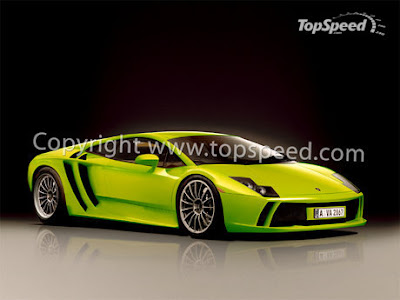
2014 Lamborghini Wallpapers

Lamborghini on Lamborghini  Foto De Lamborghini   Coches  Tuning  Y Fotos De Coches
Lamborghini Foto De Lamborghini Coches Tuning Y Fotos De Coches.

Lamborghini on Lamborghini Murci  Lago Lp640 Versace
Lamborghini Murci Lago Lp640 Versace.

Lamborghini on Car Dinal  2011 Lamborghini
Car Dinal 2014 Lamborghini.

Lamborghini on Lamborghini Diablo   Cool Car Wallpapers
Lamborghini Diablo Cool Car Wallpapers.

Lamborghini on Main    Photo Album    Lamborghini    Lamborghini Miura Front 3 4 450
Main Photo Album Lamborghini Lamborghini Miura Front 3 4 450.

Lamborghini on Verchromter Lamborghini Murcielago Lp640   Richtigteuer De
Verchromter Lamborghini Murcielago Lp640 Richtigteuer De.

Lamborghini on Lamborghini   Egoista   Un Plaisir En Solo Pour Les 50 Ans De La
Lamborghini Egoista Un Plaisir En Solo Pour Les 50 Ans De La.

Lamborghini on Plans For An Even Greater Project    A Stretch Lamborghini Limousine
Plans For An Even Greater Project A Stretch Lamborghini Limousine.

Lamborghini on Velos Designwerks Released This Caelum Blue Lamborghini Gallardo On A
Velos Designwerks Released This Caelum Blue Lamborghini Gallardo On A.

The Best Cars of 2014

the best car has to posses 7 S's: Style, Safety, Smoothness, Silence, Swiftness, be a fuel Sipper and be Sensible.  By sensible, I mean it can't feature a control system like Ford's My Touch which is impossible to use and a blight on an otherwise fine brand of cars and trucks.
The candidates for me are Honda Accord, Nissan Altima, Mazda 6, Ford C-Max Hybrid and Ford C-Max Plug-in Electric Vehicle (PEV) (notwithstanding what I just said about the My Touch system in Fords), the GM Volt, and Toyota's Camry and Prius hybrids.
Taxes included here in Canada, here are how these cars stack up in terms of cost and real-world mileage numbers (from Consumer Reports road tests):
If you want the best fuel economy, nothing beats the electrics.  But you have to pay $50k to get one.  Is it worth it?  Not at $5/gal in Canada.   In the 40 mpg space, Prius V is a great choice but, again, the fuel savings over ten years barely pay for the extra cost.   In the 30 mpg range, the remaining Japanese cars are all great contenders, so it comes down to the other S factors.

My overall choice is the Honda Accord 4 cylinder with CVT transmission.  It has the best overall balance among the 7 S's.   I especially like its simple controls for their clarity and ease of use.   The whole car makes sense and gets a big high-five for Sensible.

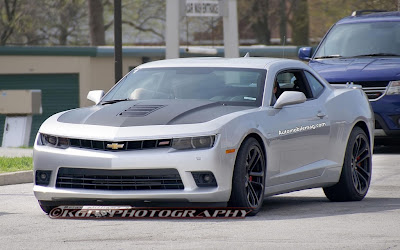
2014 Chevrolet Camaro Spy Shots

BAY CITY, Mich.- We saw the updated 2014 Chevrolet Camaro SS and Z/28 at the New York Auto Show, but what about the rest of the lineup? The latest 2014 Chevrolet Camaro Spy Shots give us a better idea of what to expect for the 1LE, ZL1, and RS models, revealing some updated and some current features.

The 2014 Chevy Camaro 1LE looks like it will keep its current blacked-out hood and matte-black rear spoiler, but will adopt some of the new features that debuted on the Camaro SS like the revised lower front fascia, hood vent, and slim grille. As far as power, we expect the 2014 Camaro 1LE to keep its 426 HP 6.2-liter V8 engine.


2014 Chevrolet Camaro Spy Shots

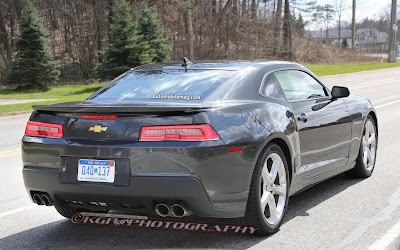
The 2014 Chevy Camaro ZL1, however, won't receive the updated front end since Chevrolet felt that changing the front fascia could have caused issues related to the packaging of its supercharged 6.2-liter V8 engine and would have required too much extra work to improve aerodynamics. But, the 2014 Camaro ZL1 will receive the new CHMSL lights above the license plate area and on top of the trunk lid.

2014 Chevrolet Camaro Spy Shots

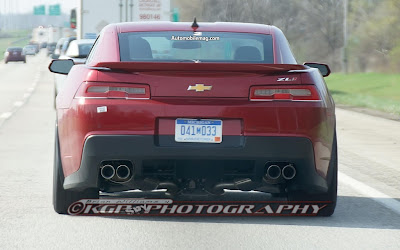
Last but not least, the 2014 Camaro RS prototype loses the SS' hood vent but adds two more exhaust outlets, amping up the curb appeal with 4 exhaust outlets. Keeping the same bold five-spoke wheels, the RS fog light trim appears to be much more simpler that that on the more powerful models.

2014 Chevrolet Camaro Spy Shots

Chevrolet's muscle car lineup will be getting some updates for 2014 as we can see in the latest Chevrolet Camaro Spy Shots! If you can't wait for the Camaro 1LE, ZL1, and RS to hit the streets, check out our 2013 Chevy Camaro Brochure, or stop by to take one for a spin at your Midland Area Chevrolet Dealer! Graff Bay City is located at 3636 Wilder Road, Bay City, MI 48706. For more information on Graff Bay City, or for any questions call us at (989) 684-4411 or visit our website: www.GraffBayCity.com.

GM Redesigns Midsize Cars - 2014 Chevrolet Malibu

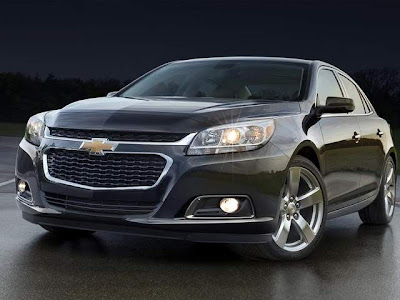
GM Redesigns Midsize Car: 2014 Chevrolet Malibu

BAY CITY, Mich. - In need of a makeover, GM revealed on Friday the new and improved Chevrolet Malibu to consumers, with hopes that the vehicle will be able to compete with other midsize segment cars.  After the redesigned 2013 Malibu failed to keep up with other vehicles such as the Toyota Camry, Ford Fusion, Nissan Altima, and Honda Accord, GM regrouped and regathered their thoughts for the 2014 car.

GM's redesigned 2014 Chevrolet Malibu boasts a bolder and sleeker front, an improved powertrain and upgraded interior.  The Malibu's grille was lowered, while they reconfigured the center console inside the vehicle.  The console is now longer, with enough storage space for two cell phones. Engineers boosted rear-seat knee room by 1.25 inches and made chassis and suspension improvements. With all thoughts on the interior and front end, there is little to no change in its rear styling.

As for technology, the Malibu's standard 2.5 liter, 4-cylinder engine, now has 2 new features: start-stop technology and variable valve lift control. The start-stop technology allows the engine to turn off while the car is stopped and restart when the driver presses the accelerator, a feature boosts mpg. The refreshed 2014 Malibu will get fuel economy of 35 mpg on the highway (increase of 3%) and 23 in the city (increase of 5%).

GM North America President Mark Reuss says that GM has to effectively relaunch the vehicle, even though it spent a large portion of 2012 doing that for the 2013 car.  "In this hotly competitive segment, we can't afford to stand still, ever," he said. "We have to move quickly, invest heavily and strive for continuous improvement and perfection."

This strive for perfection is apparent, as most products get notable upgrades every three years, and GM has decided to redesign the Malibu a year after the redesign.

Reuss said he wouldn't hesitate to adjust quickly when a product is falling short.

"I'm not going to wait for the marketplace to tell us that. I live in the future," he told reporters. "When I think things are going to taper off, or we know there's competitive pressure and we know what's coming out in a competitive way, then we're going to go at it."

The new standard Malibu produces 196 horsepower and 186 pound-feet torque, down from 197 horsepower and 191 pound-feet of torque for the 2013 version. GM will continue to offer the LS, LT and LTZ trim options, as well as the Malibu Eco (which uses mild-hybrid eAssist system).

GM will offer an optional 2-liter turbocharged engine with 259 horsepower, the same as the previous turbo option, and 295 pound-feet of torque, a 14% improvement from its predecessor.

Leasing a Car Vs Buying a Cars

You have browsed a dealer's inventory, and you have your heart set on that brand new car; the only thing left to do is to decide whether you want go with buying or leasing a car.

While you likely know the basic differences between the two options--buying means paying cash or borrowing money in exchange for ownership of a car, and leasing a car is essentially a long-term rental--it is understanding the benefits of each that should guide your decision. This article will explore the pros and cons of each choice, so that you can get the technical stuff out of the way and move into your new car.

Cost
If you want the lowest possible monthly payments, then leasing a car is without a doubt your best option. In most cases, leasing a car will save you well over a hundred dollars--if not more on your monthly bill.

Flexibility
Many people go with buying a car because they know that this option will ensure that they have a car as long as they keep up with their payments. What most people don't realize is that leasing a car offers the same benefits; once your lease is up, you have the option of keeping your car.

Discounted Purchase at End of Term
You can use the money that you have been paying towards your lease against the vehicle's value--this is a great way to dodge some of those interest fees that would have otherwise been piled up through financing. This purchase deal is usually at a preset price that protects you from the uncertainty of changing markets; it often results in a bargain discount for buying the car at the end of the term.

Discounted Future Lease Agreements
You also have the option of moving into a new lease agreement. If you decide to go this route, leasing companies will offer loyalty deals for your continued business, which equates into a lower monthly payment.

Swap a Lease like Selling a Car
Another benefit exclusive to leasing a car is the ability to assign your contract. That's right: If you are no longer able to keep up with your lease payments or you just want to get rid of your car, you can sign the contract over to another qualified individual. There are entire marketplaces dedicated to this practice, and in some cases, people will even pay you a fee for signing your contract over.

2013 Dodge Viper Cars

Dodge Viper CoupeThe 2013 model year marks the end of the line of the second generation Dodge Viper, and most likely total the end of the snake. From the original concept car debuted in 1989, the Viper has embodied the American spirit of reckless excess. Captured the imagination of car enthusiasts and manages to draw attention today. The Viper is as it always has been, a field of wild animals by road is also difficult to drive because it is rewarding. Price of 2013 Dodge Viper Coupe from $97,035

Dodge Viper CoupePower transmission for 2013 Dodge Viper Coupe is a completely crazy 8.4-liter V10 engine that roars at 600 horsepower and 560 lb-ft of torque. This engine starts Viper mass from zero to 60 mph in just 3.7 seconds with the light on the quarter mile in 11.6 in a single second to 125.7 mph. Despite its low weight, we found CAB to be a little faster. Top speed is a claimed 200 mph. Power is transmitted to the rear wheels via a six-speed manual gearbox, which is the only transmission available. Fuel economy – but obviously after the fact that the exotic sports cars – saving an estimated EPA of 13 mpg city / 22 mpg highway and 16 mpg combined.
Dodge Viper CoupeAccess to the driver’s seat can be challenging for some. Because the exhaust side of the marks, the side rails can become hot enough to burn the calves, the best drivers and find that the rather small opening of the door makes entry and exit. Those whose bottom is wider than the average can also find the seats a little uncomfortable tight.
Dodge Viper CoupeThe overall design of the interior of the Viper is pretty sad, but it may brighten a bit with the optional two-tone colors and dashboard inserts. Gauges in black and white face are easy to read and well positioned. The speedometer is mounted in the center of the large instrument module, next to the speedometer 220-mph-max. The center console seat additional gauges, audio system with CD player, air conditioning and a juicy red button Start to start the V10. We will avoid the optional navigation system because it is an older model with a smaller screen and picky, unintuitive controls.

Dodge Viper CoupeThe best safety equipment for the 2013 Dodge Viper Coupe is not included in the car. E ‘skill of the driver, preferably racing pedigree. What is, however, antilock brakes are massive 14-inch rotors which can stop the Viper 60 km / h in one eye swollen-104 feet. Conspicuous by their absence are the side airbags, traction and stability control – skills that make driving even more critical.

2013 Toyota Verso Review

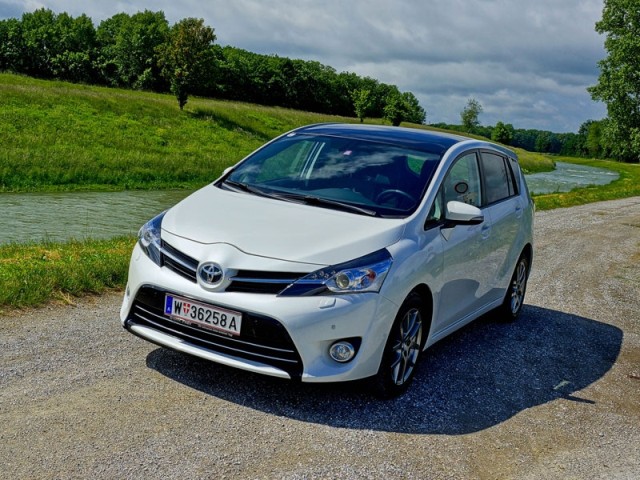
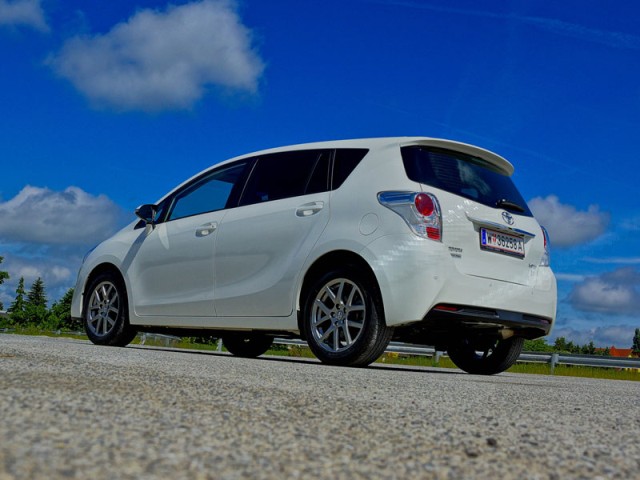
With the 2013 Toyota Verso has a family van in the offer that has already been distinguished by its generous space and the good price / performance ratio. The facelift brought the hitherto rather staid Van a good portion dynamics. Toyota has in fact especially the front section assumed that now follows the new design line Toyota and the Van is not only a very individual character, but it can also act as very high quality and sporty.

Toyota Verso 2013

Verso with the popular 2.0-liter diesel engine with 124 hp elected in the upscale lounge facilities. Toyota Verso with ABS, ESP, 7 airbags, 17 "alloy wheels, xenon headlights with LED daytime running lights, LED tail lights, electrically adjustable, heated and foldable exterior mirrors, a parking aid front and rear, rear view camera, cruise control, electric windows front and rear, a front center armrest, the Toyota Touch system with 6.1 "touch screen, a 2-zone climate control, a cooled glove box, a CD radio with AUX-in and USB connection, 6 speakers and more much more.

The changes in the interior are down only slightly the facelift, but in sum, the revised Verso has a much higher quality. Was revised especially the center console, which now houses the new Toyota Touch system with 6.1 "touch screen. Moreover, the Verso has also received lots of chrome trim elements in the Lounge version, which gives the interior a sporty touch. On require some getting used to at first glance to be the center, but towards the driver-oriented fittings, but after a few meters you will find the positioning his favor.

Toyota Verso 2013 interior

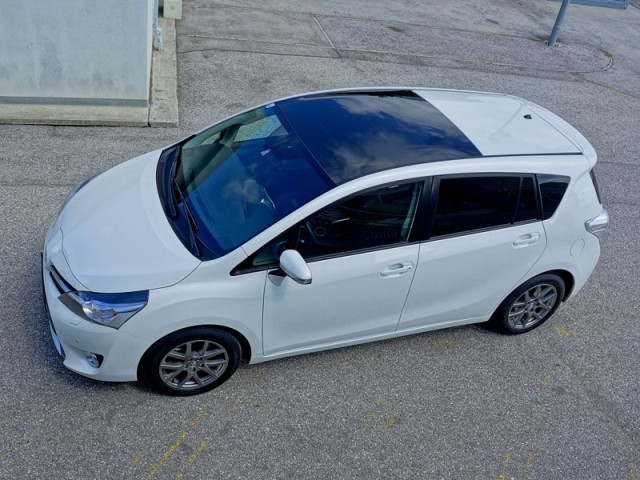
After all, the Verso will look even more spacious, an impression which is perhaps enhanced by the large panoramic roof. Also, the operation of all functions is very simple, only the Toyota Touch system has many idiosyncratic logic. So it is for example not as easy wegzuschalten the traffic, here the driver must laboriously in any submenu and goes looking for it in danger of being equal to itself a report in Traffic.

No reason to complain when there is space available. The 446 cm long Van offers truly princely space. In two rows, larger people comfortably, and the trunk volume is also designed to be very family friendly with 484 liter capacity. At the request of the boot can be increased by folding the rear seats up to 1,575 liters. Many practical shelves round the positive impression of the interior further.

In addition to the interior of the 2.0-liter diesel also turns out as a family friend. The 124 hp (91 kW) engine may be gone from the start convincing with a pleasant smoothness and lively performance. Its maximum torque of 310 Nm, it provides 1600-2400 r / min. For the sprint from 0 to 100 km / h, the Verso 2.0 D-4D then needs 11.3 seconds, top speed is 185 km / h

Toyota Verso 2013

The motor is especially suited to cross-country trips a good pulling power, which at low speed is too much power in high gears available. The manual 6-speed transmission also can be buttery soft switch and is translated rather long, so you can be on the road quite gearshift and yet economical.

Those who do not so often uses the liveliness of the engine, will come surely looking pretty close to the factory consumption of 4.9 liters. In normal driving mode, not at all hesitant acceleration and driving pleasure present, we have come in our test on 6.2 liters per 100 kilometers. The compact van that is also fun to drive and is very good on the road. To the great surprise are more sporty chassis and suspension tuned, without, however, have significant adverse effects on comfort.

The very light steering could indeed be a bit more direct, but when parking is very good. Through the large windows of the Verso is also very clear, when the parking aid parking maneuvers and the rear camera support in addition.

Toyota Verso 2013

So the van loses its terror in the city and there is just so good to move as a small car. But as an ideal family transporter, he naturally shows its strengths on the long haul. The noise insulation is up to 110 km / h very good, but then raise the wind and road noise - as so often in Japanese cars that are geared towards other speed limits than ours.

In any case, the facelifted Toyota Verso has a very positive effect. He has kept its strengths, has improved in detail and can mainly has set a truly dynamic appearance. The generous space and good facilities in combination with the fair price can be sure not only the heart beat of the family head, even for the practical Van Company can be an alternative to other vehicles.

The economical diesel allows for very smooth performance, in combination with the suspension set for a car of this class a lot of fun.

Toyota Verso 2013